
JASON SEGAL | from The Armchair Analyst
JASON SEGAL | from The Armchair Analyst
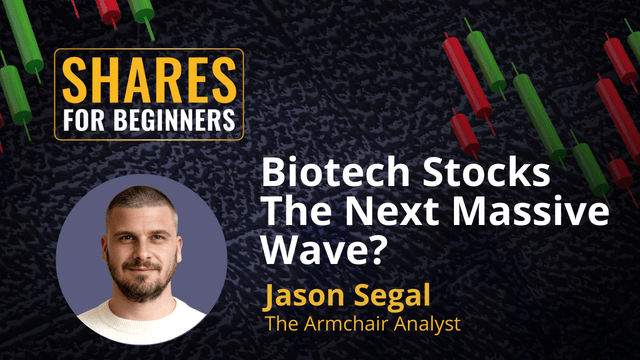

My guest this week is Jason Segal, the Armchair Analyst. Jason covers the biotech and small-cap stock sector. His dad worked as a stockbroker for 30 years, but Jason only got interested after university. During COVID, his role shifted to writing about stocks the team invested in. He learned everything self-taught, through company talks and studies.
Jason defines the "bet" for each company: how investors make money at the current price, plus the risks. The U.S. market dominates due to FDA approvals and high drug sales. Companies license rights elsewhere but hold U.S. rights for big payoffs.
Biotech excites Jason because it's like the Wild West, scrappy with less regulation than Big Pharma. Australia's R&D tax credits help, giving companies extra funds. Trials cost a lot, so firms convince investors and family offices to join. U.S. trials are pricier but key for FDA nods.
For beginners, Jason advises understanding the bet and catalysts like clinical trials. Seek external validation, such as licensing deals or big raises. Avoid tips from mates; research deeply.
We discussed the patent cliff: Big Pharma loses $200 billion in sales to generics soon, driving M&A. This trickles down, boosting smaller biotechs. Drug development takes 10-12 years, with opportunities at phase gates for safety, efficacy, and registration.
Examples include Dimerix (ASX: DXB), in phase three for a rare kidney disease. It drifted low, raised capital, then signed deals and hit highs. Cynata Therapeutics (ASX: CYP) develops scalable stem cells for autoimmune diseases, with phase two readouts soon. Mesoblast (ASX: MSB) validates the sector with its approved product.
Jason watches capital raises closely. They dilute shares but fund progress. Good ones happen on momentum, at higher valuations. He profiles all 165 ASX biotechs to spotlight science and find beaten-down gems.
Find Jason at Subscribe: The Armchair Analyst for free daily newsletters on life sciences updates.
TRANSCRIPT FOLLOWS AFTER THIS BRIEF MESSAGE
Level up your investing with Sharesight, Investopedia’s #1 portfolio tracker for DIY investors. Track 240,000+ global stocks, crypto, ETFs and funds. Add cash accounts and property to get the full picture of your portfolio – all in one place. Ditch the chaos, track like a pro! Sharesight makes investing easy. Save 4 months on an annual paid plan at THIS LINK
Portfolio tracker Sharesight tracks your trades, shows your true performance, and saves you time and money at tax time. Save 4 months on an annual paid plan at this link
Disclosure: The links provided are affiliate links. I will be paid a commission if you use this link to make a purchase. You will receive a discount by using these links/coupon codes. I only recommend products and services that I use and trust myself or where I have interviewed and/or met the founders and have assured myself that they’re offering something of value.
EPISODE TRANSCRIPT
Phil Muscatello: G' day and welcome back to Shares for Beginners. I'm Phil Muscatello. What is the power of narrative and which inoculations do you need to travel to the biotech sector? Joining me today to chat about this and more is Jason Segal, the armchair, um, analyst.
G' day, Jason.
Jason Segal: Oh, hey Phil, how's it going?
Phil Muscatello: Pretty good, thank you very much. I think we're both suffering under warm weather conditions these days, but some more humid than others.
Jason Segal: Yes, gotcha.
Phil Muscatello: Okay, so this is the first time we've met which is pretty unusual for this podcast, but just tell us a bit about yourself by way of introduction to the listeners.
Jason Segal: So I have been sort of covering the biotech and small cap stock sector for about six years now and it was funny, my dad was a, was a stockbroker for about 30 years and I never really cared about, you know, cared much for stocks up until I my first job when I was hired by a company called Stocks Digital Law that you may be familiar with their newsletter Next Investors. It's one of the largest retail investor audiences in, in Australia and part of, you know, when, when I was hired there I was m. My boss had this idea of, of one big red button that you could press and have a ASX small Cap news announcement go to as many different, as many different news outlets as possible. And at the time when it was a bit, you know, when we were developing this tech product, I was the button. So I was the guy placing all the media and doing all that and then that was sort of my first job straight out of university. And then Covid, Covid hit and the team shrunk down. But what we found was, was that because we were an online platform that basically pretty providing commentary for on small cap stocks, a lot of these companies that needed to raise capital had the budgets there, there was no way to do any of the conferences, there was no way to do investor lunches. And so we were getting a lot more business Coming through. The business model changed at that time as well, where we started covering stocks that were ones uh, that we personally invested in as well. And my boss just turned to me, sort of like mid-2020 and said, all right Jase, do you want to start writing about these stocks? And so anything that I've learned from that has been all self taught, all that I've learned speaking to companies management and what I like to do is really define what the bet is for the company. How does a retail investor, uh, if they buy the stock at this price, how are they going to make money at that price and then what are the risks that are involved in terms of not having that happen? And I think that if the bet is really clearly defined, it just helps make a lot more of, it helps the decision making framework for whether you buy more or you sell or all of that.
Phil Muscatello: So when we say biotech, we're specifically talking about life sciences. Is that the case? We're not talking about medical devices here?
Jason Segal: Yeah, yeah. So I'll add one more bit to the story as well. Just my origins is that back in um, so I lived in London for 12 months and I was still working for the same company. And when I came back I was, I was wondering, you know what, what do I do? I identify the life sciences sector, which includes biotech stocks, which is more of the drug discovery, drug development, as well as the medical side, which is medical devices, which is a little bit more. There is some element of technology development and going through the regulatory pathway, but it's also very much about sales and getting a sales team in there and selling the product and what's the value add of that product. So I identified this sector and I said, look, you know, I want to go and do something myself. So I started the armchair analyst with really the goal to make investing in biotechs as approachable as possible for the everyday retail investor, which includes um, understanding what the catalysts are and really helping define that bet for the, for the, for the investors.
Phil Muscatello: Is it always about the FDA in these kind of cases?
Jason Segal: Yeah, it's a good question. The US is the biggest market for drug sales. I don't remember off the top of my head, but it's a large portion of all of Big Pharma's dollars are uh, through the U.S. and so any company, when they go and license their drug, they license it into certain markets. So they're selling the China rights or the European rights or the rest of world rights and they find these partners to go and commercialize and
00:05:00
Jason Segal: effectively Sell the drug, they develop it and then someone else goes and sells it and they get a royalty and upfront payments and the like. But the big market that every company wants to hold on to until they get their like big nest egg is the US market. So once you sell the US rights, you've given up your biggest prize, but you really, really can get big prizes. You know, you can get a big licensing deal for it if you manage to hold on for, for a long enough time and you have the data to support why your drug should be potentially FDA approved. And then that's really what drug development companies are all chasing.
What got you excited about the Australian biotech sector
Phil Muscatello: So what is it in particular about the biotech sector, uh, that got you excited? You know, wasn't a Wild west like the mining sector?
Jason Segal: Yeah, look, to be honest, I think that the biotech sector is very, very wild west esque. And I think that uh, I was really interesting. I uh, was a guy I was chatting with probably two or three weeks ago and he said that Big Pharma is like the English Premier League where all the best players, all the best science, all the best coverage. The sector, it's like highly regulated, incredibly, incredibly tight. The Australian biotech sector is a little bit more like Championship Division 6 where if someone headbutt someone else, then the ref might not necessarily be looking. In order to win, you need to win a little bit scrappier. There's, there's ways in which your uh, the dollars need to go a little bit further, uh, in the space because there's less, less investors. And there's also like a few, I'd call like sort of factions of people that have been there in the sector and have done it before and have delivered real successful returns for shareholders. So there's, it's a real small uh, it's like a smaller community, the Australian biotech sector. But I really like it. And to be honest, I'm a little bit of a science nerd and I like the idea of just being a little bit more of an armchair scientist as well and sort of understanding how these drugs work. And then my sort of mathematical brain also is very interested in the economics of like, there's no money that any of these drug companies make while they're developing an asset and then they make all the money at once. And it's really interesting to identify how you can like play it and how the value upswings and downswings over the drug development life cycle. It's super interesting to me.
There is a steep learning curve to understanding the biotech sector
Phil Muscatello: So what sort of advice would you give beginners approaching this sector? For the first time.
Jason Segal: Yeah, it's a really interesting question and I really could think about this because the, there is a steep learning curve to understanding the biotech sector and a lot of investors who come and play are sort of like once bitten, twice shy. They'll go and invest. A mate tells them, hey, I was really successful on this company, this is the next one, they go in and then the stock does nothing or maybe there's a bad clinical trial result. So for me it's all about understanding what the bet is. What are you actually betting on when you go and invest in a company? Is it the clinical trial result and the run up to that? Is it whether or not they're going to get FDA approval? So they're already at that stage? Is it you're betting on the science and whether or not the manufacturing of the drug works? There's all these different risk points that are not quite easily understood or well known to the retail investor. And I think that's a really important part of it. And there's two sort of concepts that I think are really important to understand. The first one's external validation. So external validation comes when a biotech company or a med tech company, they go and license a deal. I think if you look at the actual way that the analyst will go and value a pre revenue biotech company, it's effectively what are the sales that they're making and then discount it back based on risk that it doesn't come out. But at the end of the day we don't really know how to value any of these things. But once there's that licensing deal or some sort of other external validation, big capital raise from real meaningful institutional investors that validates the science, that validates the efforts that the company has gone to. And as retail investors all we can do is sort of look for that external validation and then try to understand what are the risk points that the company can tick off in order to potentially get there. So clinical data, uh, ip, making sure that all the manufacturing set up, all of these things, that it's all getting one step closer, one step closer, one step closer to that external validation which is the real share price rewrite for this.
Cliff says running clinical trials in Australia is a lot more expensive than the US
These companies.
Phil Muscatello: Can we just dive in a little bit? Because you mentioned that Australia's a bit like the sixth level division where there's a bit more Biffo. Why is that? How does that work? Are they companies competing against each other or what's going on?
Jason Segal: Well, I think that the, I don't necessarily say that they're competing there's definitely some competition for attention and investor dollars. But I think that the, and Australia's in a. Really one of the best things about Australia is the R and D tax credits that they get. So every dollar that, that goes into a life sciences that a company puts into research, they get, I think it's like 48 cents back. So when a company raises capital, let's say they do $10 million, then they're getting $15 million that they can go spend on
00:10:00
Jason Segal: a uh, clinical trial. The challenge is, is that the amount of money that is needed for these trials to be done is a lot and sometimes not necessarily as much as Australian institutional investors are willing to spend. And so the companies need to sort of manage to convince retail investors and high net worths and family offices to sort of join them on the journey and have smaller uh, trigger points of de risking that they can then go and take it through to eventual registration. Whereas in the US there's the check sizes are much, much, much larger which means that the companies can then go and do these clinical validation studies and have it just be bigger uh, and better. The other thing is, is, is that running clinical trials in the US is a lot more expensive than Australia. But in order to get FDA approval they want to see us, US citizens, they want to see the registration done there. So if it's all starting out in Australia and that's where the science is getting validated, that's all well and good, but if the big ticket item is the fda, then companies will want to have run clinical trials in the us. So that's an important step and part of the process. But, but at the moment it's sort of happening a bit later down the line, sort of at a phase three, potentially a phase two.
Phil Muscatello: So presumably if a listener or viewer has got a tip from a mate at the pub about a particular biotech company, they should go to the armchair analyst to get a little bit more in depth research and understand how complex it can be, shouldn't they?
Jason Segal: Yeah, well look, I try to keep it as simple as possible. At the end of the day it's all. The easiest way to define the bet is based on these catalysts and it's sort of fundamental small cap investing. How much money does the company have? What are they going to be able to do with that money? When are they going to need to raise capital next and will they be able to use that money in order to add value to potentially take a step closer to that external validation, licensing deal, whatever it is, are they going to get data that's going to make a meaningful progress towards that.
Phil Muscatello: Why biotechs and why now?
Jason Segal: Yeah, so it's really interesting. I think the biotech space is in a really, particularly in the US at the moment, is in a really, really interesting position. Essentially there's this, there's this thing called the patent, Cliff. And I'll try to explain it as simple as possible, but when a drug gets registered, there's a seven year exclusive or seven and a half year exclusivity period where no one else can come in with a biosimilar and compete and compete with that drug. Which means that the company that sells it then has a huge level of pricing power and competitive moat. But once that drug then comes off patent, then there's a whole bunch of biosimilars that come into the market and they come in at a much cheaper price and then all that market share gets eroded. So I was having a look at the history of Viagra And Pfize was a 2, 2 billion dollars a year this pill that, that they had had discovered in late 1990s and eventually it came off patent. I think it finally came off patent um, around 2017. And then they bought in their own generic drug, but now there's a bunch of generic drugs and then. So Pfizer then loses its market share over that specific indication.
Phil Muscatello: But I was surprised in that article that you mentioned that they still have 45% of the market.
Jason Segal: Well that's, that's because of the way that they structured it because they brought in their own 1. It's 45% between Viagra and they're generic. And also the Viagra sort of brand has been really strong. So you can imagine like something like Nurofen or Panadol, these really, really strong brand names that you go, go to get it. Even if there's a generic ibuprofen that might be sitting there as well.
Phil Muscatello: Yeah, it's like when you, it's like when you go to the pharmacy, you can buy the name brand or buy exactly the same thing usually as a generic brand.
Jason Segal: Exactly. So what's about to happen is that there's a pattern, Cliff. So there's about $200 billion worth of annual sales that, that big pharma is about to now go and compete with generic drugs. So they're about to lose a massive amount of market share. So what they're doing at the moment, you would that in 2025 there was huge levels of M and a. Big pharma is now looking sort of at Phase three, phase two ready drugs, not drugs that are. M It's easier for companies to raise capital.
Phil Muscatello: And it's really important to understand about the 10 year journey or 1012 year journey that some of these molecules take to go to market isn't there? And a lot of people don't actually understand what's involved and the different phases that you have to go through but there are opportunities all through that.
Jason Segal: To uh, hold on. M so it's really important I think as an investor in these biotech stocks is to try and find where the inflection points of value are going to be and this is really where the clinical data readouts come. So.
Speaker C: Mhm.
Jason Segal: M the fda phase 3. That sort of have maybe potentially run out of money or try to raise enough capital and diluting their shares down and investors understand that they come raised trials sort of like six months.
Phil Muscatello: Markets because it's not like valuing a traditional.
Jason Segal: Yeah so I think that that's, that's really what the bet is, is what's the, the catalyst that's coming out, the clinical data that's coming up and what's the reward on the other side? What's the potential for an external validation if they're going to sign a licensing deal or are they going to get data?
Speaker C: Uh.
Jason Segal: Yeah, I think it's a really important part. I think that it's a little bit, I do, I do why people.
Phil Muscatello: Medical professionals that you can always see.
Jason Segal: 100% and and people. Twofold sometimes there are drugs that aren't necessarily working and because there's such a big passion for the sector and for finding a cure, sometimes drugs. M and a big reason why people.
00:20:00
Jason Segal: I was listening to, I was listening to.
Speaker C: Mhm. Mhm. Mhm.
Jason Segal: When we, when they just started their phase three clinical trial. So just a bit of background on the company.
Speaker C: Mhm. Mhm. Mhm. Mhm. Mhm. Mhm. Mhm. Mhm. Mhm. Mhm. Mhm.
00:25:00
Jason Segal: But I think that that's, that's why it's interesting sort of understanding what's the risk points and obvious.
Speaker C: Mhm. Mhm. Mhm. Mhm.
Phil Muscatello: See what's happened at any particular time and really see about the psychology about how investors are uh, viewing them at any particular time.
00:27:18
Any advice in this blog post is general financial advice only and does not take into account your objectives, financial situation or needs. Because of that, you should consider if the advice is appropriate to you and your needs before acting on the information. If you do choose to buy a financial product read the PDS and TMD and obtain appropriate financial advice tailored to your needs. Finpods Pty Ltd & Philip Muscatello are authorised representatives of MoneySherpa Pty Ltd which holds financial services licence 451289. Here's a link to our Financial Services Guide.